USD Bill

USD Bill

Total dollars

$––,–––,–––,–––,–––

Cash

$–,–––,–––,–––,–––

The numbers

The Ledger · As of Oct 28, 2026

How many dollars actually exist?

Most dollars are entries on a bank’s books. A small, stubborn share is still paper you can fold — and there is more of it every year.

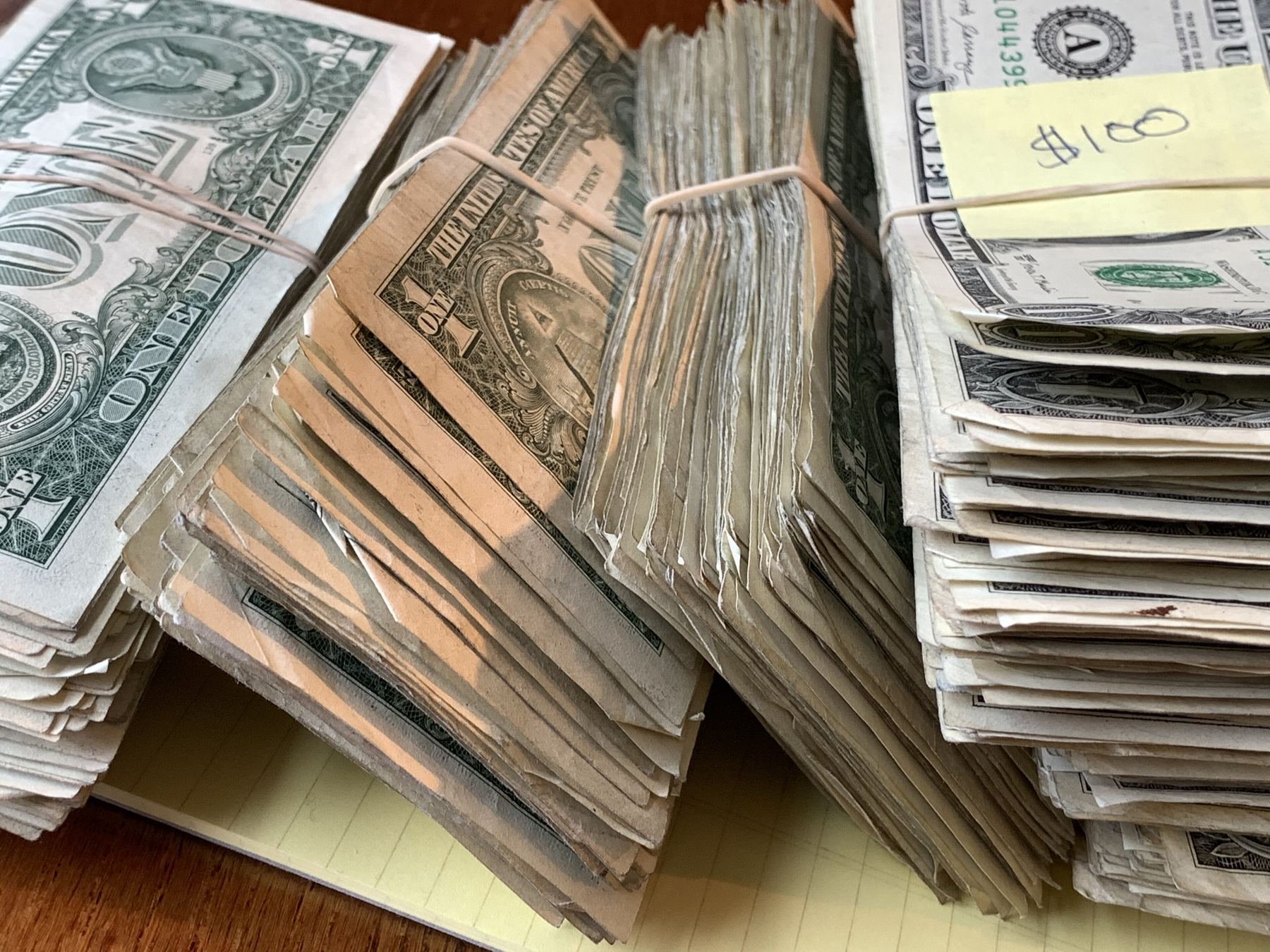
Banded stacks of worn US one-dollar bills on a desk
01

All US dollars

$23.41T

M2 money stock — currency held by the public plus checking, savings, small time deposits and retail money funds. Sept 2026, seasonally adjusted.

02

Physical cash

$2.48T

Currency in circulation — Federal Reserve notes and coin outside the Fed and Treasury, in wallets, registers and bank vaults worldwide. Week ended Oct 28, 2026; up $67.2B from a year earlier.
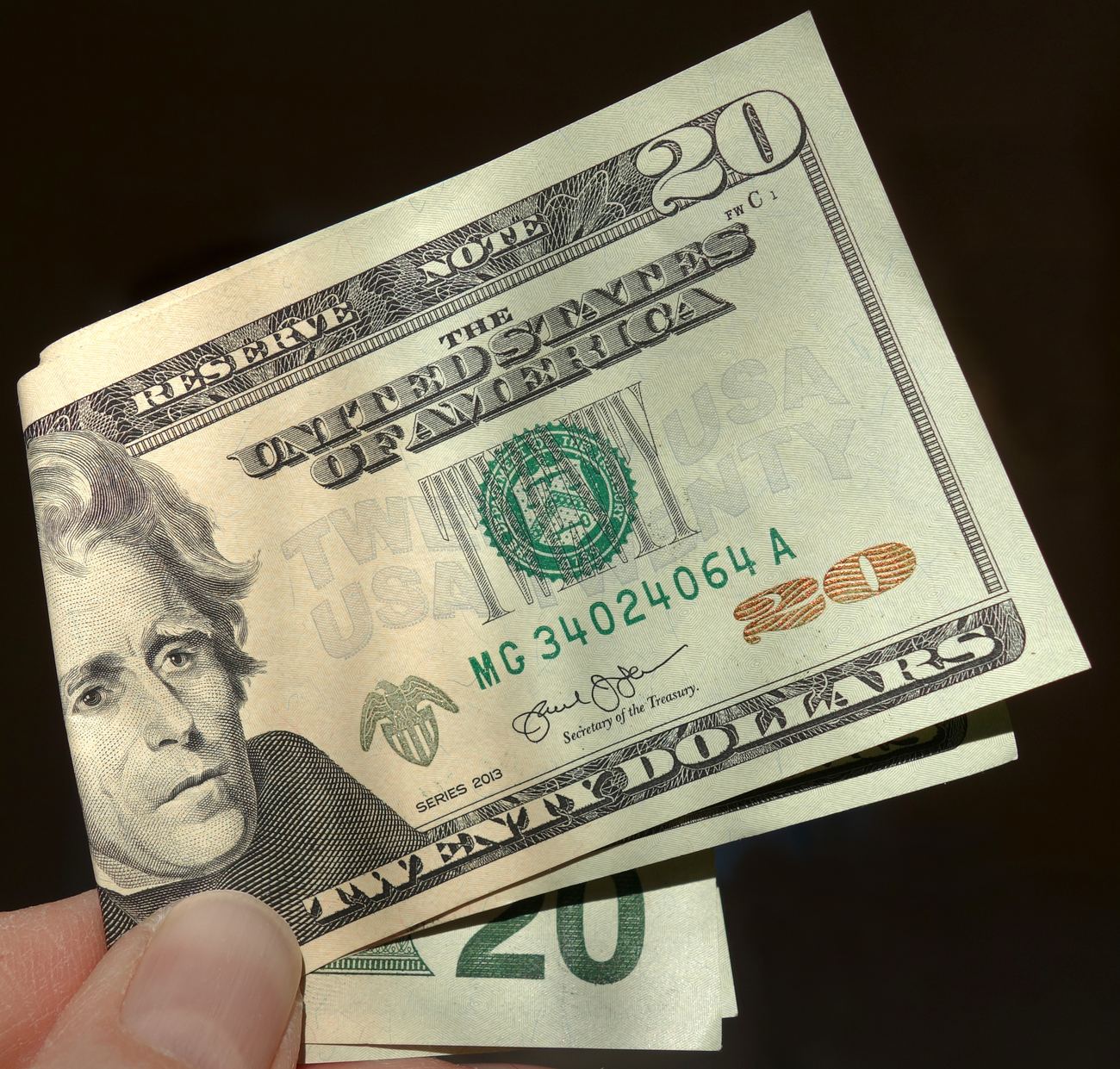
Folded US twenty-dollar Federal Reserve notes held between fingers
$20 Federal Reserve notes, Series 2013.
03

Of every $10, about $1 is cash.

Cash 10.2% Bank balances 89.8%
Federal Reserve notes
$2.434T

Paper bills — 98% of all cash.

Coin & Treasury currency
≈$52B

Pennies through dollar coins, issued by the Treasury.

Deposits & money funds
$21.02T

The rest of M2 — dollars that exist only as balances.

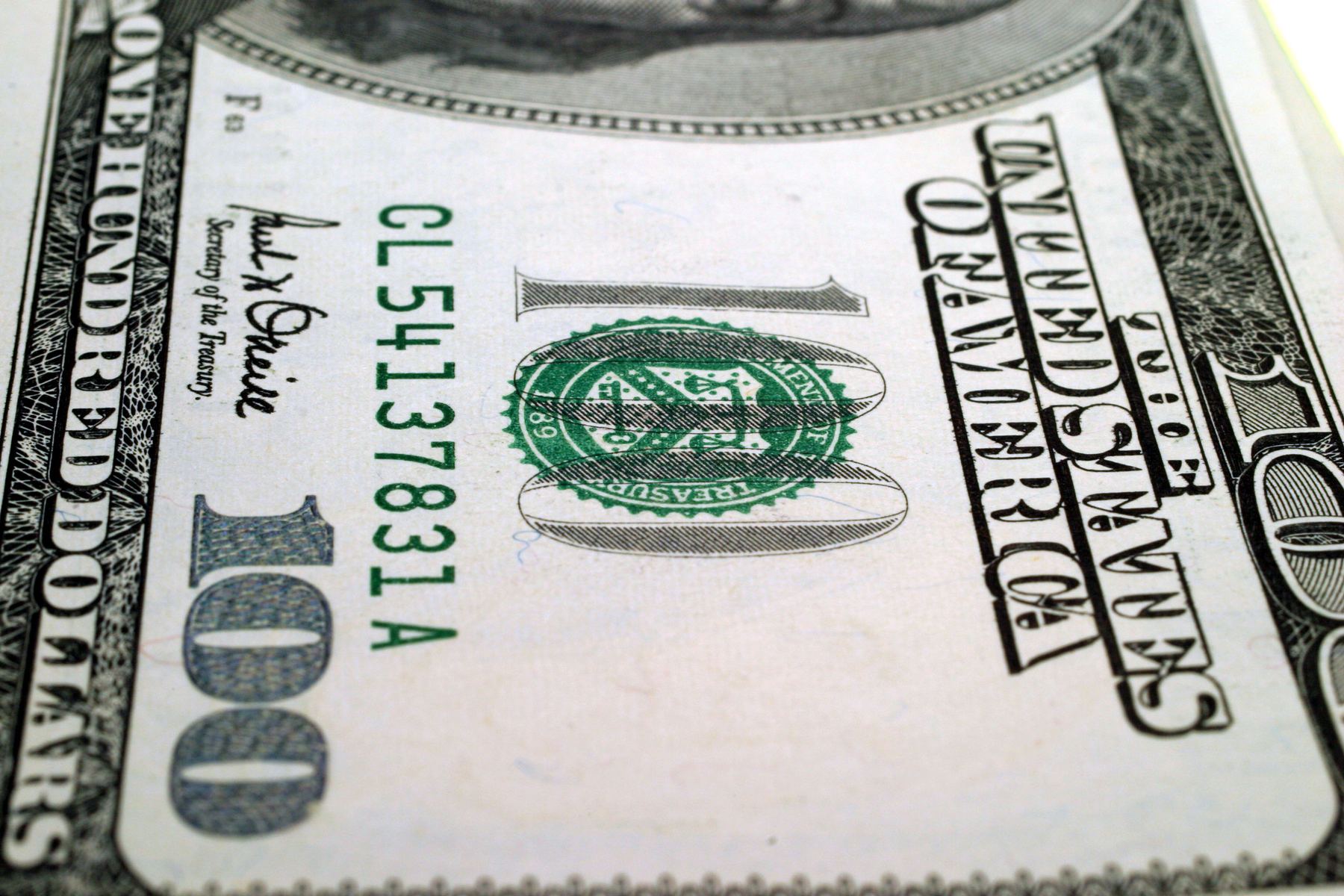
Close-up of a US one-hundred-dollar bill showing the Treasury seal and serial number
04

A decade of cash

+71.5%

Currency in circulation grew from $1.42T at the end of 2015 to $2.44T at the end of 2025 — about 5.5% a year, $1,018B of new cash.

  1. 2016$1.51T+$82.4B+5.8%
  2. 2017$1.61T+$106.0B+7.0%
  3. 2018$1.71T+$100.3B+6.2%
  4. 2019$1.80T+$86.7B+5.1%
  5. 2020$2.08T+$282.4B+15.7%
  6. 2021$2.23T+$152.0B+7.3%
  7. 2022$2.30T+$70.5B+3.2%
  8. 2023$2.34T+$36.3B+1.6%
  9. 2024$2.36T+$23.2B+1.0%
  10. 2025$2.44T+$78.7B+3.3%
  11. 2026 YTD$2.48T+$42.3B+1.7%

2020: the pandemic cash surge — the largest one-year jump in the series. 2026 is year-to-date through Oct 28, 2026.

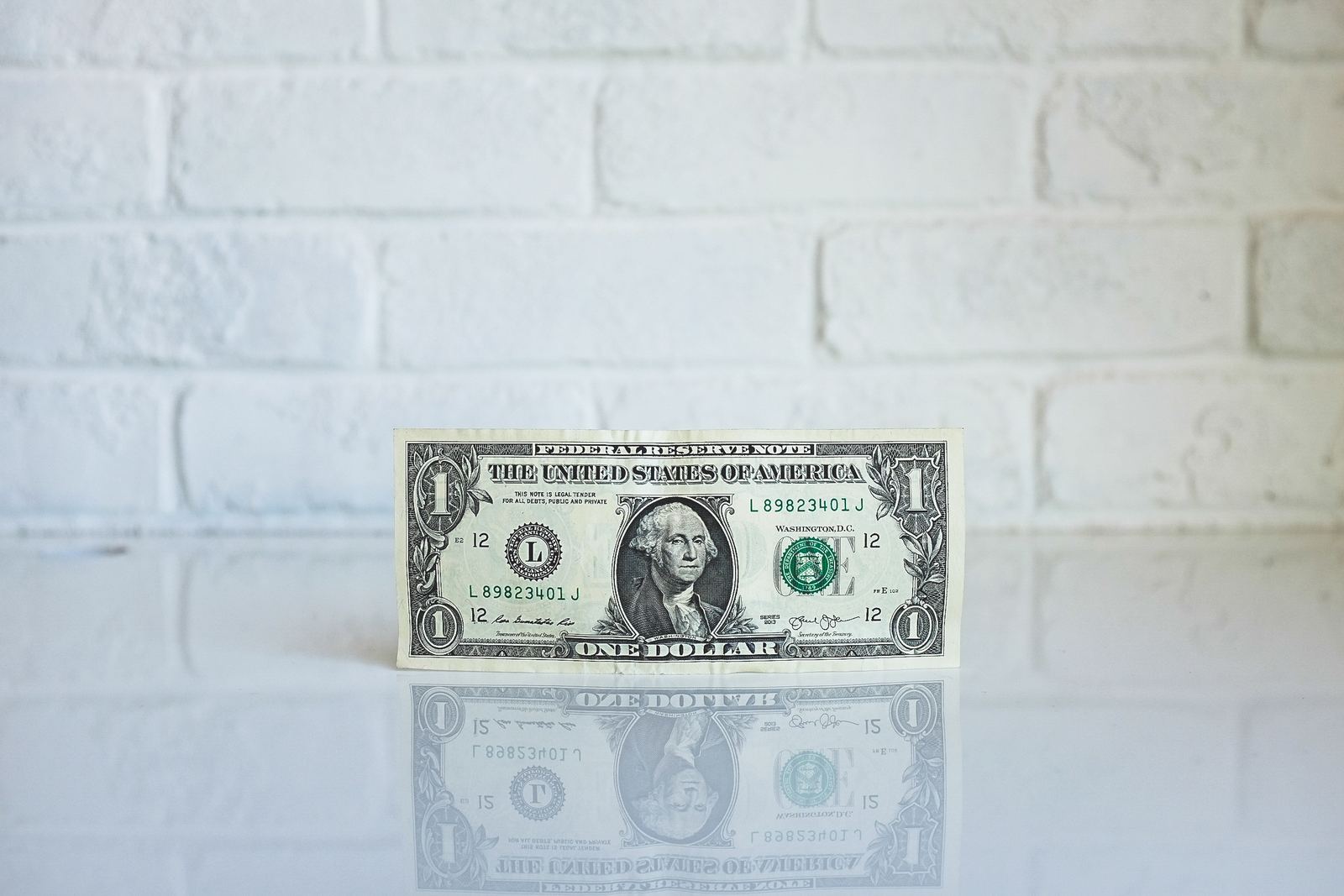
A single US one-dollar bill standing upright against a white brick wall

The Last Bill · An argument

The death of cash is not an accident.

Banks want it gone. Governments want it gone. Every one of their reasons is about them — not you.

05 · Control

Every digital dollar has a gatekeeper.

A cash payment needs two people. A digital one needs a third — a bank, a card network, a processor — and behind them, anyone with the authority to ask. Every purchase becomes a record, every record a file, every file a lever. Accounts can be frozen, payments blocked, spending capped, money programmed to expire.

When cash is gone there is no exit. A cashless society is a permissioned society, and a people who must ask permission to buy bread have taken the final step toward total human enslavement — no matter how convenient the chains feel.

06 · Face value

A $100 bill is $100 in every hand.

The first owner and the thousandth hold exactly the same thing. No one charges the person who spends it or the person who receives it. Nothing is skimmed in transit. Paper is the only money that settles instantly, privately and in full — every single time.

07 · The skim

Digital money leaks at every hop.

Card and payment rails take a cut each time money moves — around 2.9% is a typical card processing rate. One hop looks harmless. But money never stops moving: it is earned, spent, received and spent again, and each hop takes its percentage of whatever is left. Pass the same $100 through enough hands and almost all of it ends up as fees.

08

Same $100. Same hands. 10 transactions.

Cash

$100.00 kept

$0.00 in fees

  1. Hand 1$100.00−$0.00
  2. Hand 2$100.00−$0.00
  3. Hand 3$100.00−$0.00
  4. Hand 4$100.00−$0.00
  5. Hand 5$100.00−$0.00
  6. Hand 6$100.00−$0.00
  7. Hand 7$100.00−$0.00
  8. Hand 8$100.00−$0.00
  9. Hand 9$100.00−$0.00
  10. Hand 10$100.00−$0.00

Card / digital

$74.51 kept

$25.49 in fees

  1. Hand 1$97.10−$2.90
  2. Hand 2$94.28−$2.82
  3. Hand 3$91.55−$2.73
  4. Hand 4$88.89−$2.65
  5. Hand 5$86.32−$2.58
  6. Hand 6$83.81−$2.50
  7. Hand 7$81.38−$2.43
  8. Hand 8$79.02−$2.36
  9. Hand 9$76.73−$2.29
  10. Hand 10$74.51−$2.23
Keep going Value of $100 after 100 hand-offs
$0$25$50$75$100Start25 hops50 hops75 hops100 hops$74.51$47.92$22.96$5.27Cash · $100.00Taken as fees
After 25 hops
$47.92 left

$52.08 extracted

After 50 hops
$22.96 left

$77.04 extracted

After 100 hops
$5.27 left

$94.73 extracted

Illustrative model: each hand-off is a card payment that loses 2.9% to processing, and the remainder is spent again. Remaining after n hops = $100 × (1 − 0.029)n. Real fees vary by network, merchant and method — some transfers cost nothing, many cost more. Cash has handling costs too, but none of them are deducted from the bill.

09 · Thin air

If it’s made from nothing, at least print it.

The dollar is fiat: backed by nothing but decree, created rather than earned or mined. Call it worthless paper printed from thin air if you like. Then the least we can ask is that it actually be printed. A printed bill does: it carries a serial number and a signature, it has to be designed, inked, cut and shipped, and once it exists it belongs to whoever holds it.

A digital dollar asks for none of that. It is a keystroke on a ledger you cannot see, and it can be un-typed just as easily. Today about 90% of all dollars have never been printed at all. The system that creates trillions on command won’t spend a few cents of paper and ink to put a $100 bill in your hand — and it wants credit for being modern.

Face value

$100

Cost to print it

<10¢

Paper, ink and security features, per the Bureau of Engraving and Printing — about a thousandth of what the bill is worth.

Dollars never printed

90%

Share of M2 that is not currency — $21.02T of $23.41T, Fed H.6, Sept 2026.

Too cheap to print the money they’re too eager to create.